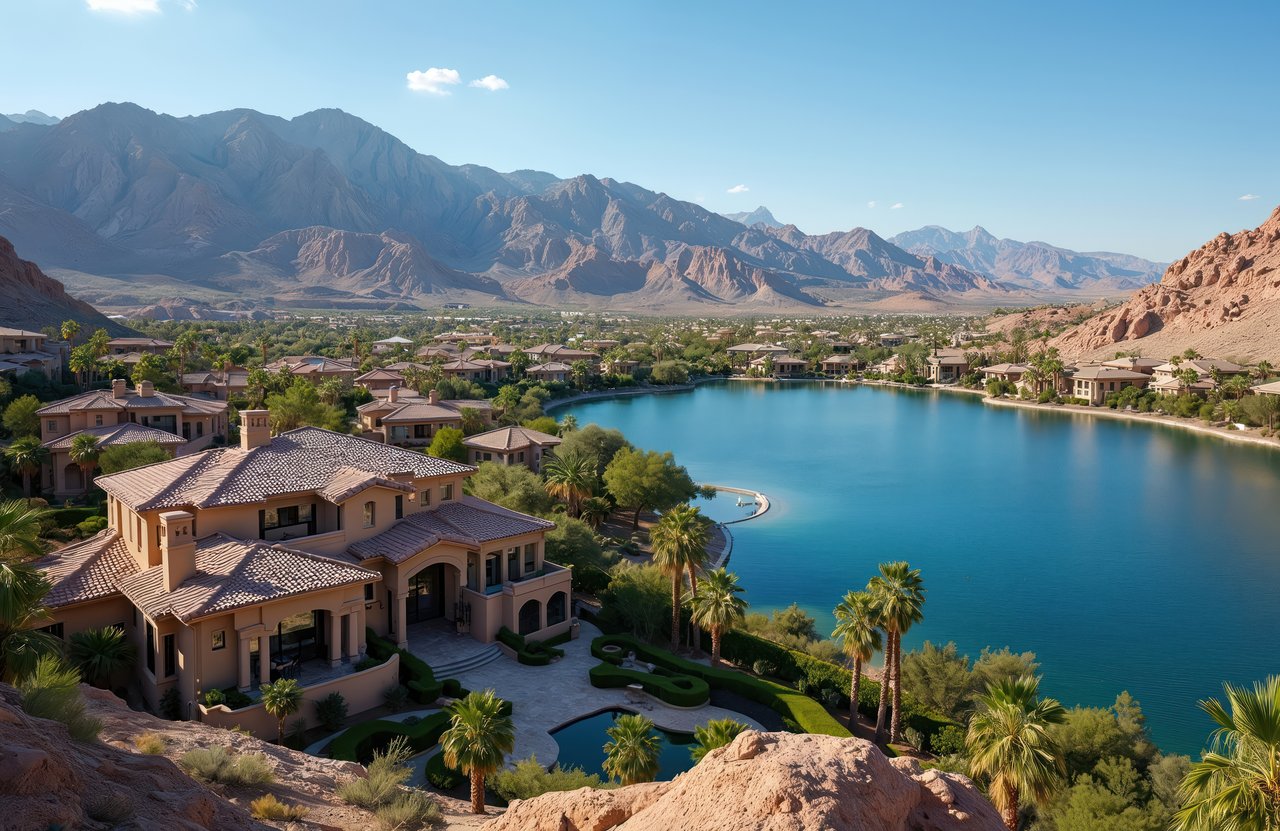
A Luxury Home Requires a Different Level of Evaluation
At higher price points, buyers naturally expect more from a property: better finishes, more space, greater privacy, stronger views and amenities that aren't commonly available in the broader market.
What becomes equally important is determining whether those features justify the property's value.
In Las Vegas, two luxury homes with similar square footage and asking prices can represent very different purchases. One may occupy an exceptional homesite with protected views and a desirable position within an established community. Another may have invested heavily in finishes but sit on a less desirable lot. A newer home may offer current architecture and systems, while an older custom residence may provide land, privacy and a location that would be difficult to duplicate today.
After more than 25 years in Las Vegas real estate, I approach a luxury home search by looking beyond what photographs and specifications can tell us.
The goal is to understand what makes a particular property valuable, how difficult those qualities would be to replace, and whether they are likely to matter when the buyer eventually becomes the seller.
Start With Location at Two Different Levels
Location in luxury real estate operates on more than one level.
The first is the community itself.
Las Vegas luxury buyers can choose among private club communities, guard-gated neighborhoods, golf communities, custom-home enclaves and newer master-planned developments throughout Summerlin, Henderson and other parts of the valley.
The Summit Club offers a very different residential experience from Ascaya. The Ridges differs from MacDonald Highlands. Red Rock Country Club and Southern Highlands appeal to buyers who may share an interest in golf but want different locations and community environments.
Once you've chosen a community, location matters again.
Where is the home positioned within the neighborhood? What does it face? What sits behind it? How close is it to an entrance, clubhouse, golf course or major road? Is the lot elevated? Does neighboring construction affect privacy? Could future development change the view?
At luxury price points, those micro-location differences can become significant.
The Lot May Be More Important Than the House
A house can be renovated. A homesite cannot be moved.
That is one of the most useful principles I can give a luxury buyer.
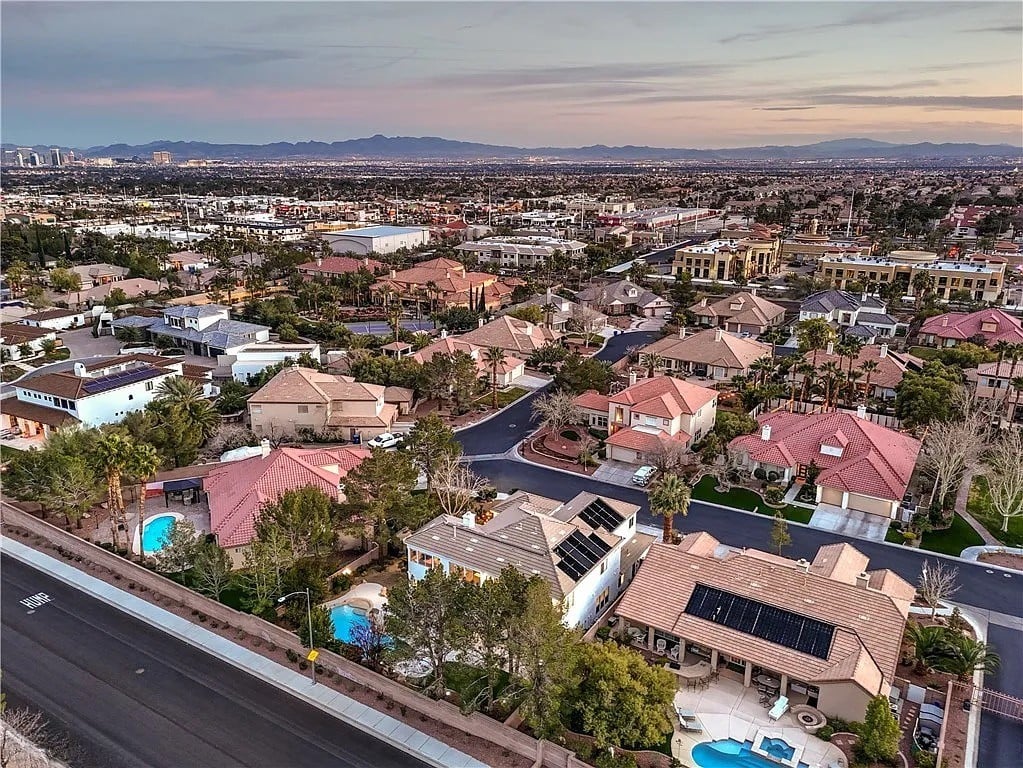
Las Vegas topography creates dramatic differences between properties. Elevation can provide Strip, mountain, golf course or valley views. Lot orientation affects sunlight and outdoor living. The shape and size of a homesite influence privacy, usable yard space and what can eventually be added or changed.
This becomes particularly important in hillside communities such as Ascaya and MacDonald Highlands and along the western edge of Summerlin, where elevation and view corridors can be major components of property value.
Buyers should also think about what may happen around the property.
An open view today isn't necessarily a protected view. Vacant land may eventually be developed. A future home on an adjacent homesite may affect privacy or sightlines.
Understanding the surrounding development plan can therefore be just as important as inspecting the home you're purchasing.
Custom Homes Need to Be Evaluated as Custom Homes
Las Vegas has a substantial inventory of custom luxury residences, and no two should be evaluated exactly the same way.
Architecture, builder quality, materials, age, maintenance and renovation history all deserve attention.
A high construction cost doesn't automatically translate into equivalent resale value. Highly personalized finishes can be meaningful to the owner who selected them without having the same value to the next buyer. Conversely, exceptional architecture, craftsmanship or a thoughtful renovation can distinguish a property from competing inventory.
I also pay attention to whether the home makes sense for the way luxury buyers live in Las Vegas.
Indoor-outdoor flow, shade, pool placement, orientation, garage capacity, guest accommodations, entertaining areas and privacy can have an outsized effect on how well a property functions here.
The most expensive feature isn't necessarily the most valuable one.
Inspections Become More Important as the Property Becomes More Complex
A luxury home can contain considerably more infrastructure than a typical residence.
Pools and spas, multiple HVAC systems, elevators, sophisticated lighting and automation, security systems, outdoor kitchens, water features, wine storage, theater equipment and extensive landscaping can all be part of the property.
Custom homes may also include specialized construction methods and materials that deserve additional evaluation.
A standard home inspection remains important, but depending on the property, buyers may benefit from additional specialists who understand specific systems or components.
The objective isn't simply to identify defects. It is to understand what you're taking ownership of and what it may require to maintain properly.
A beautifully presented property can still carry significant deferred maintenance or aging systems behind the walls.
New Construction Creates a Different Set of Decisions
Luxury new construction continues to expand in parts of Las Vegas, particularly along the western edge of Summerlin and within custom-home communities.
For some buyers, building or purchasing new offers exactly what they want: contemporary architecture, modern systems and greater control over finishes.
It also introduces decisions that don't exist when buying a completed resale home.
Homesite premiums, structural options, design-center selections, landscaping, pools, window coverings and other additions can substantially increase the final investment beyond the advertised base price.
Custom construction adds another layer involving the architect, builder, design team, approvals, budgets and timelines.
Buyers should also remember that a builder's sales representative works for the builder. Having your own real estate representation involved from the beginning provides another perspective when evaluating the homesite, contract, options and eventual marketability of the finished property.
HOA and Club Membership Deserve Careful Review
Many of Las Vegas' premier luxury communities are governed by homeowners associations, and some are built around private clubs.
These aren't administrative details to leave until the end of the transaction.
Buyers should understand applicable HOA fees, architectural guidelines, use restrictions and approval processes. In communities with private golf or social clubs, membership structure, initiation costs, dues and access to amenities may also be relevant.
The relationship between the residence and the club can vary considerably from one community to another.
For buyers planning substantial renovations or additions after closing, architectural guidelines deserve particular attention before purchasing. A project that appears straightforward from a construction standpoint may still require community approval.
Privacy Has Its Own Value
Privacy means different things to different luxury buyers.
For one person, it means a guard-gated entrance. For another, it means distance from neighboring homes. Some buyers want a property positioned so outdoor spaces aren't visible from adjacent residences. Others place greater value on controlled access or a homesite at the end of a quiet street.
This is another reason photographs can be misleading.
A listing can show a beautiful pool and backyard without showing the second-story windows overlooking it from next door.
Privacy is best evaluated at the property.
Financing and Appraisals Can Become More Nuanced
Luxury transactions may involve cash, jumbo financing or more complex financial structures.
When financing is involved, appraisal can require additional attention because truly comparable properties may be limited.
A custom estate with a superior lot, substantial renovation, unusual architecture or exceptional view may not have a recent sale nearby that neatly supports its value. The appraiser still has to work with available market evidence.
That doesn't mean distinctive features have no value. It means buyers using financing should understand that market value, replacement cost, asking price and appraised value are not always the same number.
This is particularly relevant when a property has been extensively customized.
Off-Market Doesn't Automatically Mean Better
Luxury buyers often ask about homes that aren't publicly listed.
There can certainly be value in knowing about private opportunities, particularly when inventory in a specific community or property type is limited.
But exclusivity shouldn't be confused with value.
An off-market property still needs to be evaluated against relevant sales, competing inventory, condition and the buyer's priorities. Limited exposure can make an opportunity interesting without necessarily making the asking price attractive.
I approach private opportunities the same way I approach publicly marketed homes: Does this particular property make sense at this particular price?
Think About Resale Before You Buy
Most buyers understandably focus on whether they love the home.
I also want them to understand how another buyer may view it someday.
That doesn't mean choosing a home based entirely on future resale. Luxury real estate is personal, and part of the reason people buy at this level is to get exactly what they want.
But certain characteristics consistently influence desirability.
A strong homesite. Privacy. Views. Thoughtful architecture. Functional floor plans. Quality construction. Appropriate garage capacity. Outdoor living that works in the Las Vegas climate. A desirable location within the community.
Highly specialized design choices may narrow the future buyer pool, while characteristics that cannot easily be reproduced can strengthen a property's position.
Understanding that before purchasing allows a buyer to make an informed choice rather than discovering the distinction when it's time to sell.
Price Per Square Foot Only Tells Part of the Story
Luxury buyers will inevitably encounter price-per-square-foot comparisons.
They can be useful as one point of reference, but they become less reliable as properties become more distinctive.
Consider two homes of identical size.
One sits on an elevated lot with an unobstructed Strip view. The other doesn't. One has undergone a thoughtful architectural renovation. The other needs substantial updating. One provides privacy and a large usable backyard. The other backs closely to neighboring properties.
Reducing those differences to a single price-per-square-foot figure overlooks much of what the market is actually valuing.
This is why comparable sales require interpretation rather than simple averaging at the luxury level.
The Best Luxury Purchase Is Specific to the Buyer
There isn't one Las Vegas luxury community, architectural style or price point that works for everyone.
Some buyers want the club experience of The Summit. Others prefer the established contemporary environment of The Ridges. Some are drawn to Ascaya's architecture and elevation or MacDonald Highlands' golf and views. Others may prioritize a larger homesite, mature neighborhood or a property outside the most recognizable luxury communities.
My role is to help a buyer understand those choices clearly enough to make a confident decision.
That includes recognizing a strong property when we find one. It also means being willing to identify the compromises, even when the home makes a great first impression.
Luxury buyers have more choices in Las Vegas than they sometimes realize. Knowing which qualities are worth paying for is what turns those choices into a successful purchase.
Considering a Luxury Home in Las Vegas?
Timothy Low brings more than 25 years of Las Vegas real estate experience to helping buyers evaluate luxury homes, communities, custom properties and new construction throughout the valley. Explore available luxury properties and Timothy's neighborhood guides, or connect with him to discuss what you're looking for in a Las Vegas home.