Pricing a home is about more than finding a number that looks reasonable on paper. Understanding comparable sales, current competition, buyer behavior and the characteristics of your property can help you enter the Las Vegas market with a price you can defend.
When I meet with homeowners who are preparing to sell, the conversation eventually reaches the same question:
What should we list the house for?
It sounds like a question that should have a straightforward numerical answer. Look at a few recent sales, calculate a price per square foot and choose a number somewhere in the range.
In practice, pricing a home well requires more analysis than that.
A home's list price affects which buyers discover it, what they compare it with, how they perceive its value and, ultimately, whether they decide to make an offer. Pricing too high can make an otherwise desirable property easier to overlook. Pricing too low without a clear reason can leave a seller wondering whether the market would have supported more.
After more than 25 years in Las Vegas real estate, I approach pricing as a positioning decision. The objective is to understand what the property is likely worth in the current market and choose a list price that gives buyers a compelling reason to engage with it.
How Do You Determine What a Las Vegas Home Is Worth?
I start with the market evidence.
Recent comparable sales are important because they show what buyers have actually been willing to pay. But identifying the right comparable properties requires more than searching for homes with approximately the same square footage and number of bedrooms.
I look at factors such as:
- Location and neighborhood
- Community and HOA
- Homesite and lot position
- Age and architectural style
- Floor plan and usable living space
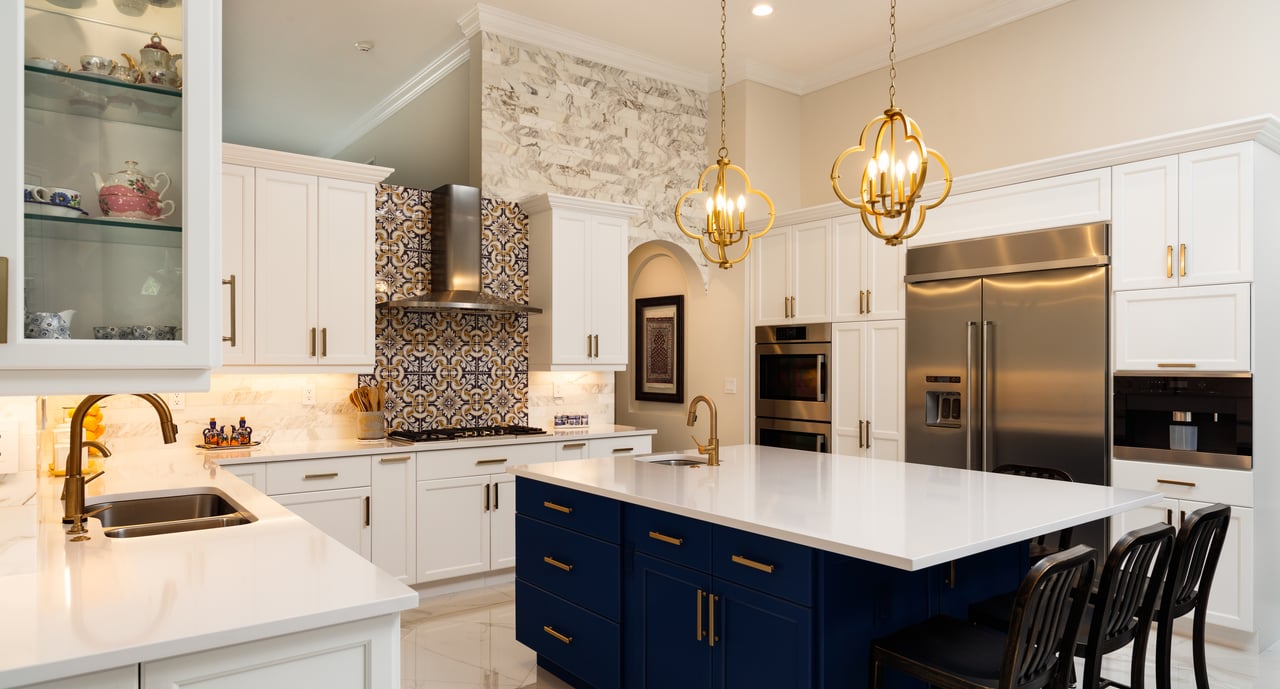
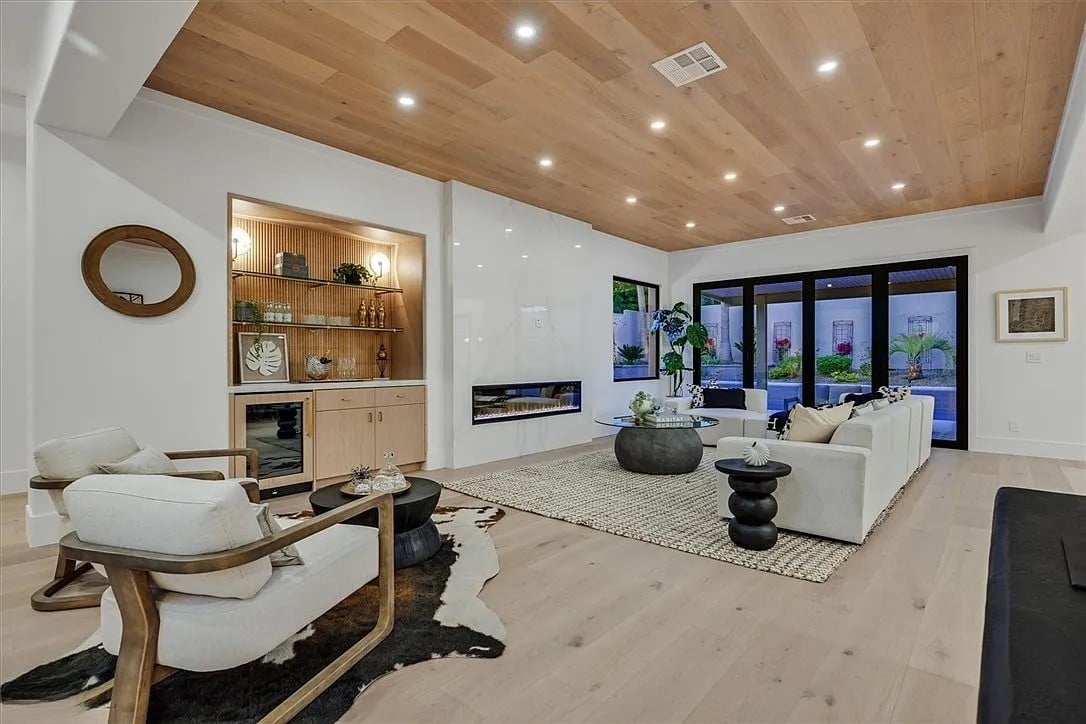
- Condition and quality of renovations
- Pool and outdoor living
- Views, privacy and orientation
- Garage capacity
- Builder or custom construction
- Current competing inventory
The relevance of each factor depends on the property.
For some homes, an exceptional lot may materially influence value. For another, extensive renovations may distinguish it from nearby sales. In a luxury community, differences in elevation, views, privacy or architecture can make two homes with similar square footage very different properties.
The goal isn't to find a house that looks roughly similar on paper.
It is to understand why buyers would consider one property comparable to another.
The House Down the Street May Not Be Your Best Comparable
Homeowners naturally pay attention when a nearby property sells.
That sale may be useful information, but proximity alone doesn't make it the best comparison.
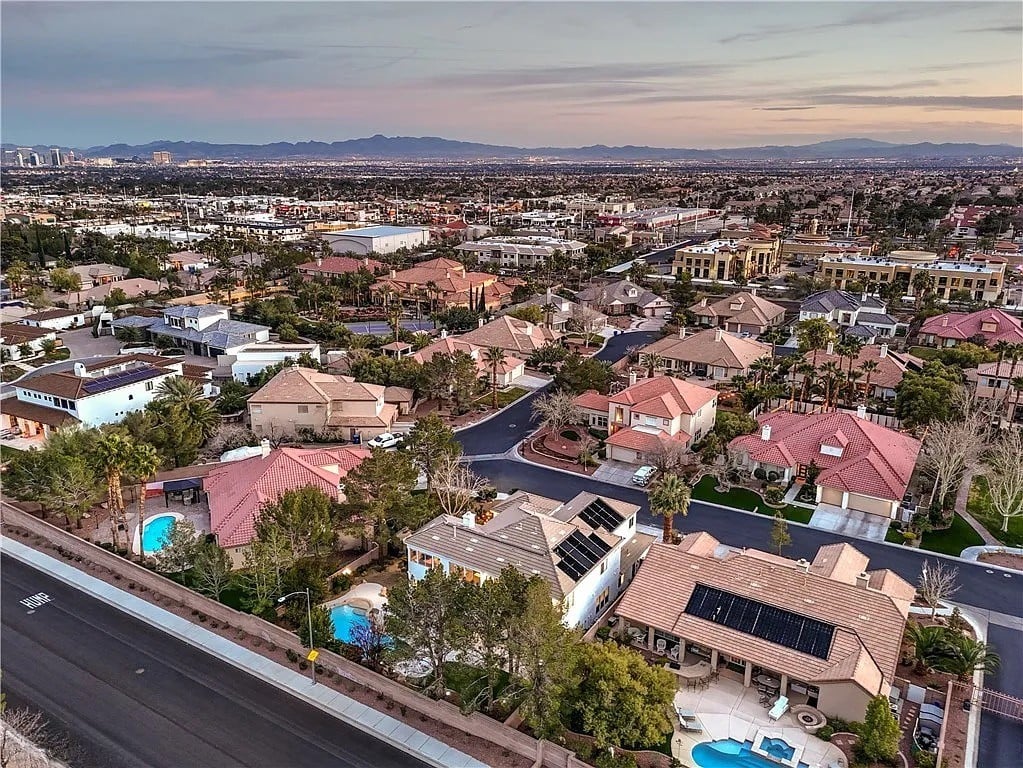
Suppose two homes are in the same Summerlin neighborhood and have similar square footage. One backs to another residence while the other has an elevated homesite with an unobstructed view. One has its original interior while the other has been comprehensively renovated. One has a three-car garage and pool while the other does not.
Those differences can matter substantially to buyers.
The opposite is also true. A beautifully renovated home a few streets away may have sold for a premium that the market won't automatically apply to an original-condition property.
I want to understand the differences before using any sale to support a pricing recommendation.
Why Active Listings Matter When Pricing Your Home
Closed sales tell us where the market has been.
Active listings tell us what buyers can choose right now.
That distinction is important.
A buyer considering your home isn't deciding between your property and a house that sold three months ago. They are deciding between your home and the other properties currently available within their budget and preferred location.
Before recommending a list price, I want to know what that buyer will see when they search.
If your home would be one of the strongest options in its price range, that gives us useful information. If buyers can purchase a more updated property, a better lot or additional features for approximately the same price, we need to account for that as well.
This is why a pricing strategy based only on past sales can miss an important part of the market.
Your home's value is influenced by what has sold, but its market position is influenced by what is for sale.
How Important Is Price Per Square Foot?
Price per square foot can be useful.
It can also be misleading when it becomes the entire valuation method.
If several highly comparable homes in the same neighborhood have recently sold, their price-per-square-foot ranges can provide context. But homes aren't interchangeable units of space.
A 4,000-square-foot home with an efficient floor plan may live very differently from another 4,000-square-foot property with significant space devoted to hallways, formal rooms or areas buyers don't value as highly.
Lot quality, views, condition, construction quality and outdoor improvements don't fit neatly into a square-foot calculation either.
This becomes particularly important with luxury and custom homes, where individual property characteristics can have a significant influence on value.
I use price per square foot as one piece of evidence.
I don't let it make the decision.
What You Spent on the Home Doesn't Determine What It Is Worth Today
This can be one of the more difficult parts of a pricing conversation.
Homeowners know what they paid for their property. They also know what they spent afterward.
Maybe they installed a pool, replaced flooring, remodeled the kitchen, added landscaping, upgraded the HVAC systems or invested substantially in custom finishes.
Those improvements may absolutely influence value.
But the market doesn't reimburse homeowners dollar for dollar for every improvement.
Some projects have broad buyer appeal. Others were primarily chosen for the homeowner's enjoyment. Some renovations may be several years old by the time the property is sold. And certain improvements that were expensive to complete may be features buyers simply expect at that price point.
I want to identify which investments actually differentiate the property in today's market.
The relevant question isn't:
How much money have I put into this house?
It is:
How much more is a buyer likely to pay because those improvements are there?
Those can be very different numbers.
Should You Price a Las Vegas Home High to Leave Room for Negotiation?
Some sellers are tempted to start above market value because they assume buyers will negotiate anyway.
There are circumstances where building reasonable negotiating room into a price makes sense. But intentionally overpricing a property carries a risk.
Buyers don't evaluate your home in isolation.
If the asking price places it alongside properties with better locations, larger lots, more extensive renovations or stronger features, the comparison may work against you before a negotiation ever begins.
A buyer can't negotiate with a property they decided not to see.
There is also an important difference between testing the upper end of a supportable value range and choosing a price that the market evidence doesn't justify.
The first can be a strategy.
The second is often just an experiment—and the seller bears the cost if it doesn't work.
What Happens When a Home Is Overpriced?
The first few weeks on the market matter because that is when a new listing typically receives its greatest exposure to buyers already searching in that category.
If buyers consistently see the property and decide there are better options for the money, activity may be limited.
Eventually, the seller may reduce the price.
A price adjustment can absolutely generate renewed interest, but by then the property is no longer new to the market. Buyers and agents who have already seen it may begin asking why it hasn't sold.
That doesn't mean every home that takes time to sell was overpriced. Unique properties and higher price points can naturally have smaller buyer pools.
But when the market repeatedly tells us that buyers don't see sufficient value at the asking price, I think we should pay attention.
Market feedback is information.
Does Pricing a Home Lower Create Multiple Offers?
It can, but it isn't guaranteed.
Pricing below expected market value is sometimes used to attract more buyers and encourage competition. In the right market and for the right property, that strategy can work.
But sellers should understand what they're relying on.
The strategy assumes enough qualified buyers will recognize the opportunity, compete with one another and ultimately push the price toward—or beyond—the property's expected value.
If that competition doesn't materialize, the seller still has to decide how to respond to the offers received.
I don't believe every Las Vegas home should be priced low simply to generate activity.
The pricing strategy should reflect the property, current demand and the seller's objectives.
Search Ranges Can Influence Buyer Exposure
Pricing also has a practical digital component.
Buyers frequently search for homes using price filters.
A buyer may search up to $750,000, $1 million, $1.5 million or another threshold based on budget. Where a property falls relative to those search ranges can affect which buyers see it.
That doesn't mean every home should be priced at an arbitrary round number.
It does mean I consider how a list price affects the property's competitive set and online visibility.
For example, moving a price slightly above a common search threshold may place the property in front of a different group of homes—and potentially remove it from searches conducted by buyers who might otherwise have considered it.
A pricing recommendation should account for how buyers actually search, not just how a number looks on a listing agreement.
Luxury Homes Require More Property-Specific Pricing
The higher the price point and the more distinctive the property, the less useful broad averages tend to become.
A luxury home may derive significant value from characteristics that are difficult to reproduce: an elevated homesite, protected views, privacy, architecture, custom construction, interior quality, significant outdoor living or a particularly desirable position within a community.
These characteristics don't always appear clearly in automated valuations or basic comparable-sale reports.
The buyer pool may also be smaller, and buyers at this level often have more alternatives. They may be comparing homes in The Ridges with The Summit Club, or Summerlin with luxury communities in Henderson, rather than limiting their search to one subdivision.
Pricing needs to reflect both the property's individual qualities and the alternatives available to the buyer.
That is why I spend so much time understanding what makes a property difficult to replace.
Scarcity can support value.
But we still need evidence that buyers recognize and are willing to pay for that scarcity.
How Do You Know If Your List Price Is Working?
Once a property reaches the market, we gain information that wasn't available beforehand.
We can see how buyers respond.
Are they viewing the listing online? Are qualified buyers scheduling showings? What are agents saying after those showings? Are buyers returning for second visits? Are offers being made? How does activity compare with competing properties?
No single piece of feedback should dictate a price change.
But patterns matter.
If buyers consistently like the home but choose another property because they perceive better value elsewhere, that tells us something.
If there is strong showing activity but no offers, we need to understand why.
If there is almost no activity from the appropriate buyer pool, we need to evaluate whether the price, presentation or market conditions are limiting interest.
Pricing isn't something I decide once and then stop thinking about.
I establish the strongest price I believe the market evidence supports, and then I continue evaluating that position as the market gives us new information.
The Highest List Price Isn't Necessarily the Best Pricing Recommendation
When homeowners interview agents, they may receive very different opinions about what their property is worth.
Naturally, the highest number can be appealing.
But a pricing recommendation should be something an agent can explain and defend.
I think sellers should ask:
Which comparable properties support this price?
How does my home compare with what buyers can purchase right now?
Which features are adding value, and which aren't?
What buyer are we expecting to pay this price?
What is our plan if the market responds differently than expected?
A thoughtful pricing conversation should leave you understanding the reasoning behind the number—not simply feeling good about the number itself.
Price the Property You Have for the Market You Are Entering
A successful pricing strategy starts with an objective view of the property.
Not what it was worth at the height of another market.
Not what a neighbor hopes their home is worth.
Not what you spent renovating it.
And not what an automated estimate says without understanding the home.
We need to evaluate the property you have, the buyers who are active now and the homes those buyers can choose instead.
That doesn't mean pricing conservatively for the sake of a quick sale. My responsibility to a seller is to protect the value of the property and pursue the strongest outcome the market can reasonably support.
But the price needs a foundation.
The strongest list price isn't necessarily the highest number we can put on the home. It is the number we can support with the property, the competition and the current market.
What Is Your Las Vegas Home Worth?
If you're considering selling a home in Las Vegas or Summerlin, I can help you understand how your property compares with recent sales and the homes currently competing for buyers.
With more than 25 years of Las Vegas real estate experience, I look beyond a basic automated estimate or price-per-square-foot calculation to evaluate the characteristics that can influence how buyers perceive your home.
Contact me for a property-specific pricing conversation before you decide where your home should enter the market.